The Sacred Notebook Ritual: When List-Making Becomes Your Most Productive Hobby

The Great Stationery Pilgrimage
Every three months, you find yourself wandering the aisles of Target like a lost prophet seeking enlightenment in the office supplies section. This time will be different, you tell yourself, running your fingers along the spine of a $24 planner that promises to "transform your life in 90 days." The previous planner—abandoned somewhere around February 3rd—clearly wasn't the chosen one. But this burgundy leather-bound beauty with the motivational quotes and habit tracker? This is it. This is the notebook that will finally turn you into the person who responds to emails promptly and meal preps on Sundays.
You purchase the planner with the reverence of someone acquiring a religious artifact. The cashier doesn't understand that they're not just scanning a barcode—they're facilitating a spiritual transaction between you and your future organized self.
The Ceremony of Fresh Pages
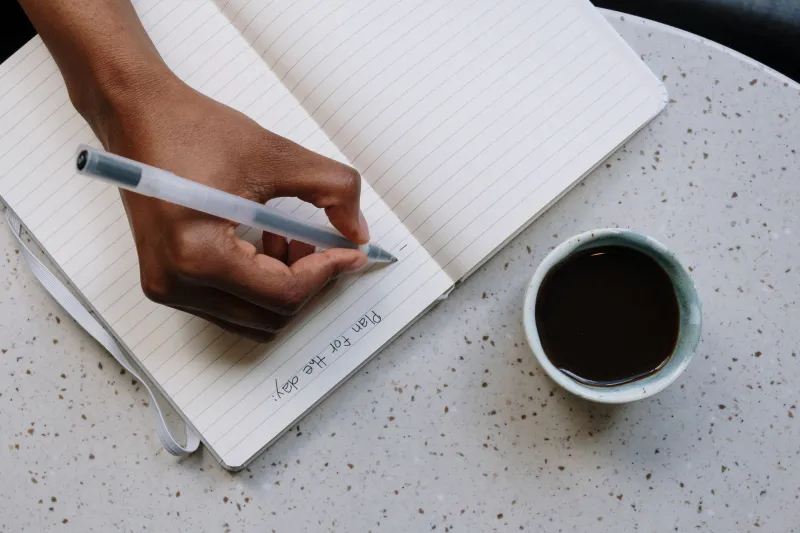
Back home, you clear a sacred workspace. The new planner deserves proper respect. You gather your collection of gel pens (organized by color temperature, obviously), your highlighters, and that pack of tiny sticky tabs you bought six months ago and have never opened. This isn't just planning—this is performance art.
The first page gets the full treatment: today's date written in your very best handwriting, followed by "GOALS" in block letters that would make a kindergarten teacher proud. You spend forty-seven minutes crafting the perfect heading format, testing different pen combinations, and debating whether your bullet points should be circles or squares. The actual goals can wait. This aesthetic foundation is crucial.
The List That Keeps on Listing
Once you've established the visual hierarchy, the real magic begins. You start with the obvious tasks: "Call dentist," "Buy groceries," "Respond to Mom's text from Tuesday." But why stop there? This planner has pages. Beautiful, empty pages that deserve to be filled with your ambition.
Soon you're adding tasks like "Research best houseplants for north-facing windows" and "Learn basic Spanish phrases" and "Organize digital photos from 2019." Each item gets its own carefully crafted checkbox, some with little stars for priority, others with color-coded dots for different life categories. You've created a masterpiece of organizational theory.
The most satisfying moment comes when you add tasks you've already completed just so you can immediately cross them off. "Made coffee" gets a triumphant checkmark. "Bought planner" receives a double line for emphasis. Look at you go, productivity champion.
The Reality Gap Widens
Week two arrives with the subtle weight of expectation. Your beautiful list stares back at you, still pristine except for those two pre-completed items. "Call dentist" has been migrated to three different pages now, each time rewritten with slightly more aggressive underlining.
You decide what this system really needs is more structure. Maybe if you break down "Clean apartment" into seventeen sub-tasks, each with their own checkbox, you'll finally tackle it. "Dust living room surfaces" becomes its own line item, separate from "Vacuum living room floor" and "Organize living room magazines." Surely this level of specificity will unlock your motivation.
Instead, you spend an hour researching the most effective cleaning schedules and color-coding your new micro-tasks by room. The apartment remains exactly as messy as before, but your planner? Your planner is a thing of beauty.
The Multiplication of Systems
By month two, you've realized that one planner simply cannot contain your organizational genius. You need specialized systems. A separate notebook for meal planning. Another for work projects. A tiny one for your purse because inspiration doesn't wait for you to get home.
Each notebook gets its own ritual, its own pen assignment, its own perfectly formatted first page. You now spend more time managing your planning systems than most people spend on their actual tasks. You've become the CEO of a productivity empire where the only product is more lists.
Friends start commenting on your extensive notebook collection. "Wow, you're so organized!" they say, not realizing they're looking at the graveyard of good intentions. Each abandoned planner represents a version of yourself that was going to wake up at 6 AM and drink more water and finally organize that junk drawer.
The Eternal Migration
"Call dentist" has now appeared in four different planning systems. It's become less of a task and more of a recurring character in your organizational fiction. Sometimes you write it in red ink for urgency. Sometimes you add multiple exclamation points. Once, you even scheduled a specific time slot for it, complete with a little clock drawing.
The dentist appointment remains unmade, but "Call dentist" has achieved immortality through repetition. It's the cockroach of your to-do lists, surviving every system reboot and notebook migration.
Meanwhile, actual life keeps happening around your planning empire. You somehow manage to function, complete tasks, and maintain relationships without consulting any of your seventeen organizational systems. The irony is lost on you as you research new bullet journaling techniques on your phone while sitting in your car outside the dentist's office, having finally made an appointment through their online portal.
The Truth About Productivity Theater
Here's what nobody tells you about the planning obsession: making the list has become its own reward system. Your brain gets that sweet dopamine hit from the act of organization itself, completely bypassing the need to actually do anything. You've gamified productivity by removing the productivity part entirely.
Your planners aren't tools—they're elaborate procrastination devices dressed up in motivational quotes and color-coordinated glory. You've created a hobby out of what was supposed to be a system, and honestly? You're kind of excellent at this hobby.
The real task you've mastered isn't time management or goal achievement. It's the art of making yourself feel productive while accomplishing absolutely nothing. And judging by the thriving planner industry and the thousands of YouTube videos about bullet journaling, you're not alone in this particular talent.
So here's to your beautiful, pristine, completely useless planning empire. May your lists be forever color-coded, your handwriting eternally Instagram-worthy, and your actual tasks perpetually scheduled for "next week."