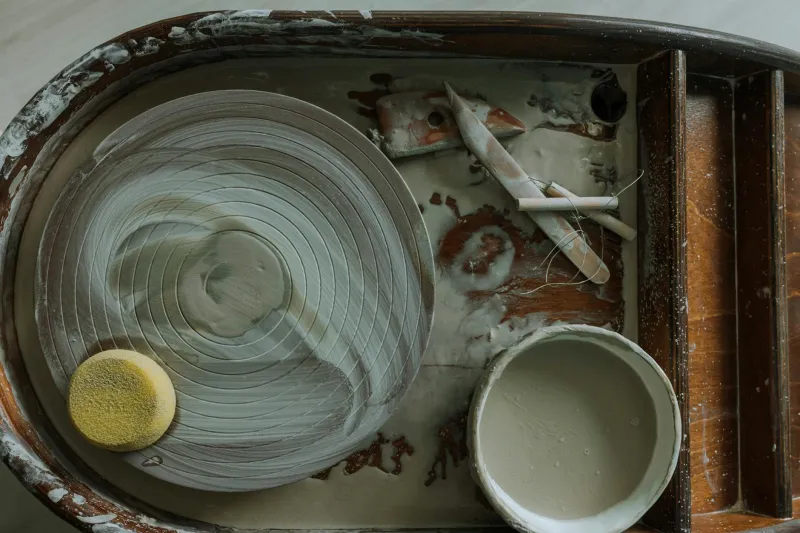
The Spark of Inspiration
It started innocently enough. You saw someone's Instagram story featuring a beautiful hand-thrown ceramic mug, and something deep in your soul whispered, "I could do that." Within minutes, you were three videos deep into pottery tutorials, mentally redesigning your living space to accommodate a kiln you definitely couldn't afford.
This is how it always begins: one moment of inspiration that launches you into what can only be described as academic-level research into a hobby you'll pursue with the dedication of a doctoral candidate and the follow-through of a goldfish.
The Research Phase (Also Known As The Entire Hobby)
Your browser tabs multiplied like rabbits. "Pottery for Beginners." "Essential Clay Tools Under $50." "Common Pottery Mistakes (And How to Avoid Them)." "Advanced Glazing Techniques for the Modern Artist."
Wait, advanced techniques? You hadn't even bought clay yet, but somehow your brain had already fast-forwarded to you opening your own artisanal studio. You bookmarked seventeen different YouTube channels, joined four pottery Facebook groups, and subscribed to a pottery magazine that would arrive monthly as a gentle reminder of your abandoned dreams.
By day three, you could explain the difference between earthenware and stoneware to anyone who would listen, despite having never actually seen either in person.
The Equipment Acquisition Syndrome
This is where things got serious. You couldn't just start with clay and your hands like some kind of amateur. You needed the right tools. Professional tools. Tools that would transform you from a complete beginner into someone who looked like they knew what they were doing.
Your Amazon cart filled with items you'd learned about through intensive YouTube research: pottery tools with names you could now pronounce correctly, special clay that was supposedly perfect for beginners, and a pottery wheel that cost more than your monthly groceries but was "an investment in your artistic future."
You spent two hours reading reviews, comparing features, and watching unboxing videos. By the time you clicked "purchase," you were practically a pottery equipment expert.
The Community Integration
No serious hobbyist operates in isolation. You joined r/pottery, where you spent hours scrolling through photos of other people's work, upvoting pieces you could now critique with surprising sophistication. "Nice form, but the glaze pooled a bit at the base," you'd think, as if you hadn't learned that exact phrase from a tutorial two days earlier.
You followed pottery Instagram accounts and started using terms like "throwing" and "bisque firing" in casual conversation. Your friends were impressed by your sudden expertise in ceramic arts, not realizing that your knowledge was entirely theoretical.
The Arrival and The Reality
When your pottery supplies arrived, you felt a surge of excitement mixed with something that felt suspiciously like panic. The clay looked different than it did in the videos. Heavier. More... clay-like.
You set everything up in your garage, arranged your tools with the precision of a surgeon, and sat down at your wheel with the confidence of someone who had watched approximately forty hours of pottery content.
The clay immediately flew off the wheel and splattered against the wall.
This was not how it looked in the tutorials.
The Gentle Retreat
After three attempts that resulted in clay carnage and the dawning realization that muscle memory can't be downloaded from YouTube, you decided to "take a break" to "do more research."
Back to the videos you went, this time watching with the sobering perspective of someone who had actually touched clay. Suddenly, every smooth movement in the tutorials looked impossibly graceful. Every perfectly centered piece of clay seemed like magic.
"Maybe I need to understand the fundamentals better," you told yourself, bookmarking more beginner tutorials.
The Quiet Abandonment
Weeks passed. Your pottery wheel sat in the garage, gradually accumulating dust and the occasional curious glance from you as you walked past. Your clay hardened in its packaging. Your tools remained pristine and organized, like a museum exhibit titled "Optimism: A Study in Good Intentions."
But your YouTube algorithm? Your algorithm was still faithfully serving up pottery content, because it knew you better than you knew yourself. You still watched occasionally, nodding along to techniques you'd definitely try "next weekend" or "when you had more time."
The New Obsession
Then one day, you saw a video about sourdough bread making. The starter bubbling away in its jar looked so alive, so full of possibility. "How hard could it be?" you wondered, already opening a new browser tab.
Within an hour, you were learning about hydration percentages and autolyse, planning your sourdough timeline like a NASA mission. Your pottery wheel watched from the garage as you dove headfirst into becoming a theoretical bread expert.
The Beautiful Cycle
This is the modern hobby experience: becoming genuinely, passionately interested in something, researching it with the intensity of a graduate student, acquiring the necessary equipment with the optimism of someone who has never met their own attention span, and then gently, quietly, moving on to the next fascinating thing that catches your eye.
Your browser bookmarks have become a graveyard of abandoned interests: pottery, sourdough, urban gardening, watercolor painting, that brief but intense period when you were going to learn Italian.
But here's the thing: you're not failing at hobbies. You're succeeding at curiosity. You're a renaissance person in the age of YouTube, accumulating knowledge and appreciation for crafts you'll probably never master but definitely respect.
And who knows? Maybe someday you'll actually use that pottery wheel. Right after you finish watching this fascinating documentary about beekeeping that just popped up in your recommendations.
After all, how hard could keeping bees really be?