Message Seen: Welcome to the Psychological Thriller You Never Asked to Star In
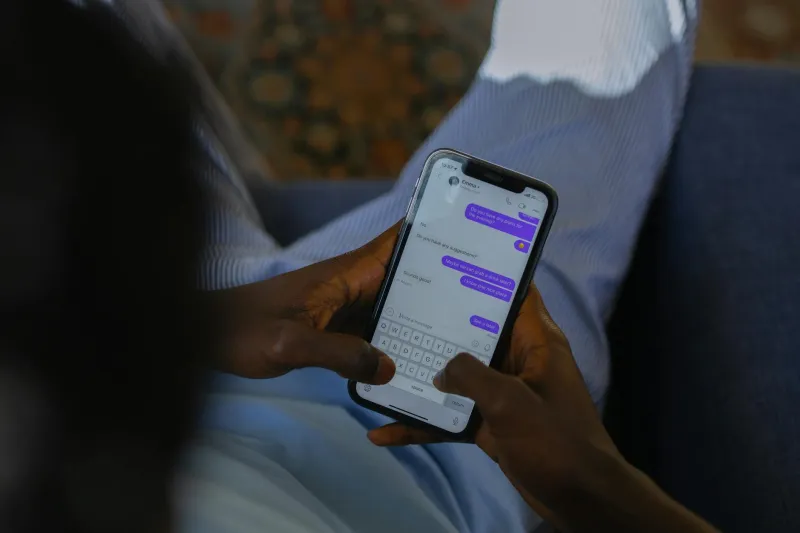
The Moment Everything Changes
There it is. Two words that transform your entire emotional landscape: "Read 2:47 PM." What was once an innocent message floating in the digital void has now been officially received, processed, and... ignored? Filed away? Lost in a mental inbox that apparently operates on geological time?
You sent a simple "Hey, want to grab lunch tomorrow?" and suddenly you're living in a psychological thriller where the main character is your own sanity and the villain is a tiny gray timestamp that confirms someone saw your words and chose silence.
The Forensic Analysis Begins
Within seconds, you've transformed into a digital detective. Was it really read, or did they just swipe past it in their notifications? Maybe they opened it by accident. Maybe their phone was in their pocket and somehow unlocked itself and opened your message through a series of highly improbable but theoretically possible pocket-touches.
You begin studying the evidence like you're preparing for trial. They were active on Instagram 12 minutes ago—you know because you checked. They liked your coworker's lunch photo 8 minutes ago. They're clearly alive, clearly holding their phone, clearly capable of typing. Yet your message sits there, acknowledged but unanswered, like a guest who showed up to a party that was apparently canceled.
The Typing Indicator Torture
Then it happens: those three dots appear. Your heart rate spikes as if you've just spotted a bear in the wilderness. They're typing! Vindication! Your message was worthy of a response after all!
You watch those dots like they contain the secrets of the universe. Are they crafting a lengthy response? Are they struggling to fit their weekend plans into a single message? Are they writing and rewriting, trying to find the perfect words to express their enthusiasm about lunch?
The dots disappear.
No message arrives.
You have now entered what scientists call "The Dot Zone"—a realm where hope and despair exist simultaneously, where those three little dots have somehow become the most important symbols in your life.
The Great Reappearing Act
Fifteen minutes later, the dots return. This time you're ready. You're watching your phone like it's a live sporting event where your emotional wellbeing is the prize. The dots pulse with meaning. They're definitely typing something substantial this time. This isn't a quick "yes" or "no"—this is a real response.
Dots gone again.
Still nothing.
You're now convinced that either they're writing a novel-length response about why they can't do lunch, or they're trapped in some kind of texting purgatory where they can see your message but can't respond due to forces beyond their control. Maybe their phone is broken. Maybe they're in a dead zone. Maybe they've been kidnapped and the kidnappers allow them to see messages but not respond to them.
The Social Media Surveillance
You begin what can only be described as light stalking. Not creepy stalking—just casual, concerned-citizen stalking. You check their Instagram story. They posted a coffee cup 20 minutes ago. They're clearly fine, clearly caffeinated, clearly capable of sharing their beverage choices with the world but apparently incapable of confirming lunch plans.
Their Spotify activity shows they're listening to music. Their Venmo shows they bought something 30 minutes ago. They're living their life, conducting business, engaging with the world—just not with your message about lunch.
You start to question everything. Was lunch too presumptuous? Should you have suggested coffee instead? Is lunch too intimate? Too casual? Too... something?
The Follow-Up Dilemma
Hours pass. Your original message now feels like ancient history. You're faced with the ultimate modern dilemma: do you send a follow-up message, thereby admitting that you've been thinking about this interaction for an unreasonable amount of time, or do you wait it out and risk looking like you don't actually care about lunch?
The follow-up message is a delicate art form. Too eager, and you're the person who can't take a hint. Too casual, and you might seem like you're backtracking on your lunch enthusiasm. Too explanatory, and you're definitely overthinking this.
You draft seventeen different follow-up messages:
"Just following up on lunch!" "No worries if you're busy!" "Let me know about tomorrow!" "???"
You send none of them. Instead, you craft what you believe is the perfect balance of casual and concerned: "Hey! Just wanted to make sure you saw my message about lunch tomorrow."
The moment you hit send, you realize you've made everything worse. Now you're the person who sends follow-up messages about people seeing your messages. You've become that person.
The Response That Changes Nothing
Finally, after what feels like several geological eras but was actually four hours, they respond: "Sorry! Just saw this. Yes to lunch!"
Just saw this? JUST SAW THIS? You have photographic evidence that they read it at 2:47 PM. It is now 6:52 PM. In what universe does "just saw this" apply to a four-hour delay?
But you're so relieved to have a response that you immediately forgive the obvious lie. "Great! How about that place on Main Street?"
Read 6:53 PM.
And so it begins again.
The New Social Contract
Somewhere along the way, we all agreed to participate in this elaborate dance where read receipts exist but response times are apparently governed by chaos theory. We live in a world where we can see that our messages have been received and processed, but we all pretend that seeing a message and responding to it are completely unrelated events that may or may not occur within the same calendar year.
We've created a system where "I didn't see your message" is an acceptable excuse even when technology provides irrefutable evidence that you did, in fact, see the message. We're all complicit in this beautiful lie that sometimes messages just float around in a digital limbo where they're simultaneously seen and unseen, acknowledged and ignored.
The Universal Truth
The real tragedy is that we all do this to each other. You've definitely been the person who reads a message and doesn't respond for hours, then acts like you just discovered it. You've been the person whose typing indicator appears and disappears like a ghost. You've been the person who's active on every other platform while ignoring direct messages.
But when it happens to you, when you're on the receiving end of the read-but-not-responded-to message, it feels personal. It feels intentional. It feels like a carefully orchestrated campaign designed specifically to make you question whether lunch plans are actually that complicated.
In the end, the read receipt has become the most anxiety-inducing innovation of the digital age. It's turned every casual message into a performance review and every unanswered text into a philosophical crisis about the nature of modern communication.
But hey, at least we're all suffering through it together, one "Read 2:47 PM" at a time.