The Eleven-Minute Eternity: A Psychological Field Guide to Waiting for Your Food

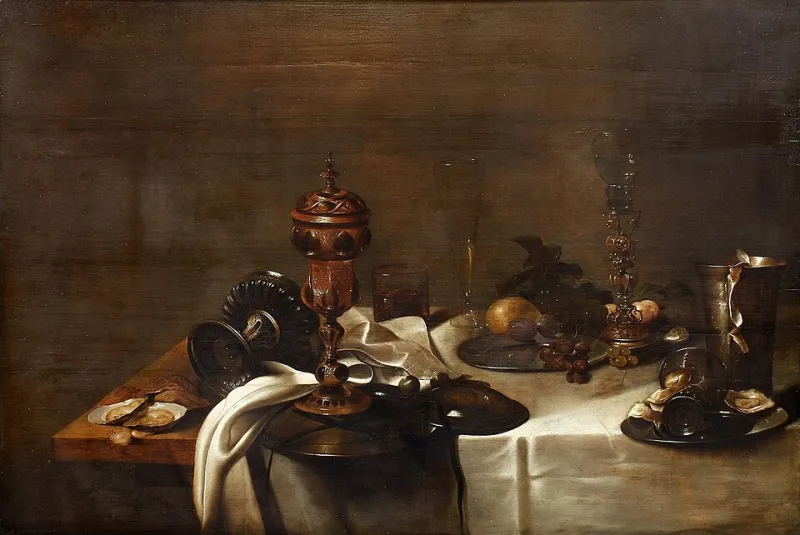
Photo: Rama, CC BY-SA 3.0 fr, via Wikimedia Commons
The moment the server walks away with your order, something shifts.
For about ninety seconds, you are still a functional social being. You say something like "I almost got the salmon" and your dining companion says something back, and you both nod, and it feels natural. This is the grace period. Enjoy it. It ends faster than you think.
By minute two, the conversation has reached a natural resting point and you are both now simply existing at a table with nothing to do and no socially acceptable way to acknowledge that you are very, very hungry and primarily here for the food.
Welcome to the eleven-minute eternity. Please keep your hands visible at all times.
The First Defense: Aggressive Condiment Engagement
The table has objects on it. This is lucky.
You will rotate the salt shaker. You will read the hot sauce label with the focused attention of someone studying for an exam. You will reorganize the sugar packets by color, then by size, then return them to their original chaotic state when you realize you've been doing it for four minutes and your companion is watching you.
The paper straw wrapper becomes origami. The menu — which has already been taken away, so you're now just holding your own hands — becomes something you look at as if it's still there.
Some people deploy the phone. This is a controversial move in a dining context, but it is also completely understandable and you should not judge anyone for it, including yourself. A quick, casual scroll communicates: I am a person with things going on. I am not just sitting here thinking about bread.
You are just sitting there thinking about bread.
The Bread Situation
If bread arrives, the entire emotional landscape changes. Bread is a gift. Bread is a sign that the kitchen knows you exist and is actively working on your behalf. You will eat the bread slowly and deliberately, rationing it, because you don't want to fill up before the actual food, but also you absolutely will eat all of it and feel zero regret.
If bread does not arrive, you will spend a portion of the eleven minutes calculating whether you are at a bread restaurant or a non-bread restaurant and whether it would be appropriate to ask. You will decide not to ask. You will think about asking. You will not ask.
The Wrong Order Arrives at the Wrong Table
This is the moment. This is when things get complicated.
Somewhere within eyeshot, a server approaches with plates. Your brain performs an involuntary calculation: trajectory, plate count, table proximity, likelihood this is for us. You sit up slightly. You make brief, hopeful eye contact with the food.
The food goes to the table next to you.
You watch it land. You watch them receive it. You watch them not even look excited about it, which feels personally offensive. That table got a burger. You ordered a burger. That is essentially your burger, sitting six feet away, being eaten by someone who does not appreciate it the way you would.
You smile at your dining companion. "Looks good over there," you say, because you are a composed adult with reasonable coping mechanisms.
Internally, you have entered a new emotional phase that has no name but sits somewhere between longing and mild betrayal.
The Philosophical Crisis of the Hands
At some point during the wait, you will become acutely aware that your hands are just sitting there. On the table. Doing nothing. This is fine when you have a menu to hold or a glass to sip, but once the water is gone and the menus are gone and the bread question has been internally resolved, your hands become a logistical problem.
Cross them? You look defensive. Flat on the table? Aggressive. In your lap? You look like you're hiding something. You try a casual lean with one hand supporting your chin and immediately feel like a stock photo of a person listening.
You settle on a light grip around your water glass, even though it's empty, because at least it gives you something to do when you need to look casual.
The Arrival
And then — finally, beautifully — it comes.
The server is walking toward you with purpose. The plates are facing the right direction. The trajectory is correct. You feel the specific joy of a person who has been mildly suffering and is about to stop.
"Who had the burger?" the server asks.
You raise your hand like you're in fourth grade. You don't care. The burger is here. Everything is fine now. The eleven minutes are over, and you are once again a person who is simply having a nice meal with someone they like.
You eat the first bite before they've even set down the second plate.
No one mentions it. This is the social contract of dining out, and you are grateful it exists.